
Current research projects
Expand all
-
Gottfried Semper: Style. Critical and Commented Edition
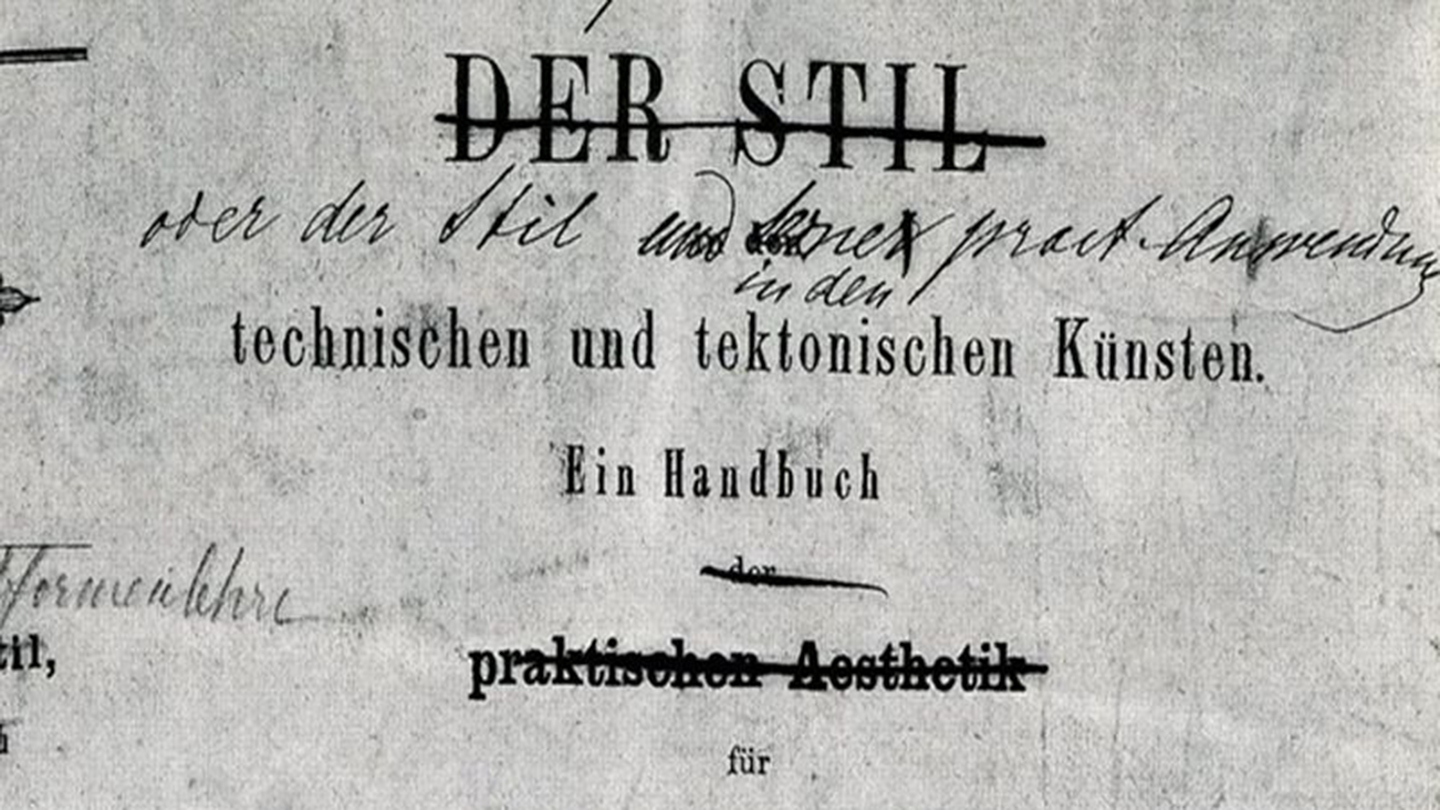
Gottfried Semper (1803–79) ranks among the most outstanding spatial designers of the nineteenth century. To this day, his diverse theoretical writings not only continue to be of interest to the history of art and architecture, but also provide a lasting source of inspiration for architectural practice.
Semper’s magnum opus on architectural theory, «Style in the Technical and Tectonic Arts; or, Practical Aesthetics» (1860/63), is at the centre of the edition project. The two volumes remain compelling to this day for their approach to understanding architecture as a product of cultural practices. Semper’s broad interests cover research far beyond the usual boundaries of the history of architecture and art, from cultural history and linguistics to evolutionary theory and ethnology.
The project – a collaboration of ETH Zurich and the Università della Svizzera italiana, Mendrisio – offers a critical and commented edition in digital form of the various print editions of «Style» and the associated manuscripts. For the first time, the extensive body of texts and images is made available in its entirety in a scientifically verifiable form. Drafts, working copies and proofs (mostly at gta Archives, ETH Zurich) are transcribed critically and edited in a comparative approach together with the printed editions.Due to extent and complexity of the material, the edition project is modularly structured in three stages. In the first two phases (2017–24), materials related to the two volumes of «Style» published during Semper’s lifetime, as well as those of its direct precursor, Semper’s unpublished «Theory of Art Forms» (Kunstformenlehre) have been edited. In the third phase (2025–28), the material related to the planned but unpublished third volume of «Style» is being edited. This includes the relevant manuscripts of «Comparative Architecture» (Vergleichende Baulehre) and a selection of Semper’s lectures given at ETH Zurich, which survive as student notes.
Diversity of material to be edited requires an innovative digital open-access presentation. A critical apparatus with commentary level links the edition to external materials and databases and makes Semper’s scientific and cultural context accessible. Complex textual layers are presented in a user-friendly way so that Semper’s conceptual universe can be experienced by both specialists and the generally public.
This is edition is the first and only project of its type in the world relating to the Semper materials. It employs cutting-edge methods and technologies in the fields of digital editing and digital humanities and makes a significant contribution to their advancement. The edition thus constitutes essential infrastructure in the field of history of art and architecture.
Responsible
Prof. Dr. Philip Ursprung (ETH)
Prof. Dr. Sonja Hildebrand (USI)
Prof. Dr. Maarten Delbeke (ETH)Project leader
Dr. Elena Chestnova (USI)Editorial leader
Dr. Dieter Weidmann (USI)Scientific collaborators
Dr. Bernhard Metz (USI)
Raphael Germann (USI)Former collaborators
Dr. Carmen Aus der Au
Dr. Felix Christen
PD Dr. Michael Gnehm
Dr. Tanja KevicDuration
144 monthsBeginning
January 2017Funding sources
SNFLinks
ETH Zurich - gta
Research Database SNF
www.semper-edition.ch
Expand all
-
Giovanni Battista Piranesi and his Workshop: Two newly identified Albums at Karlsruhe
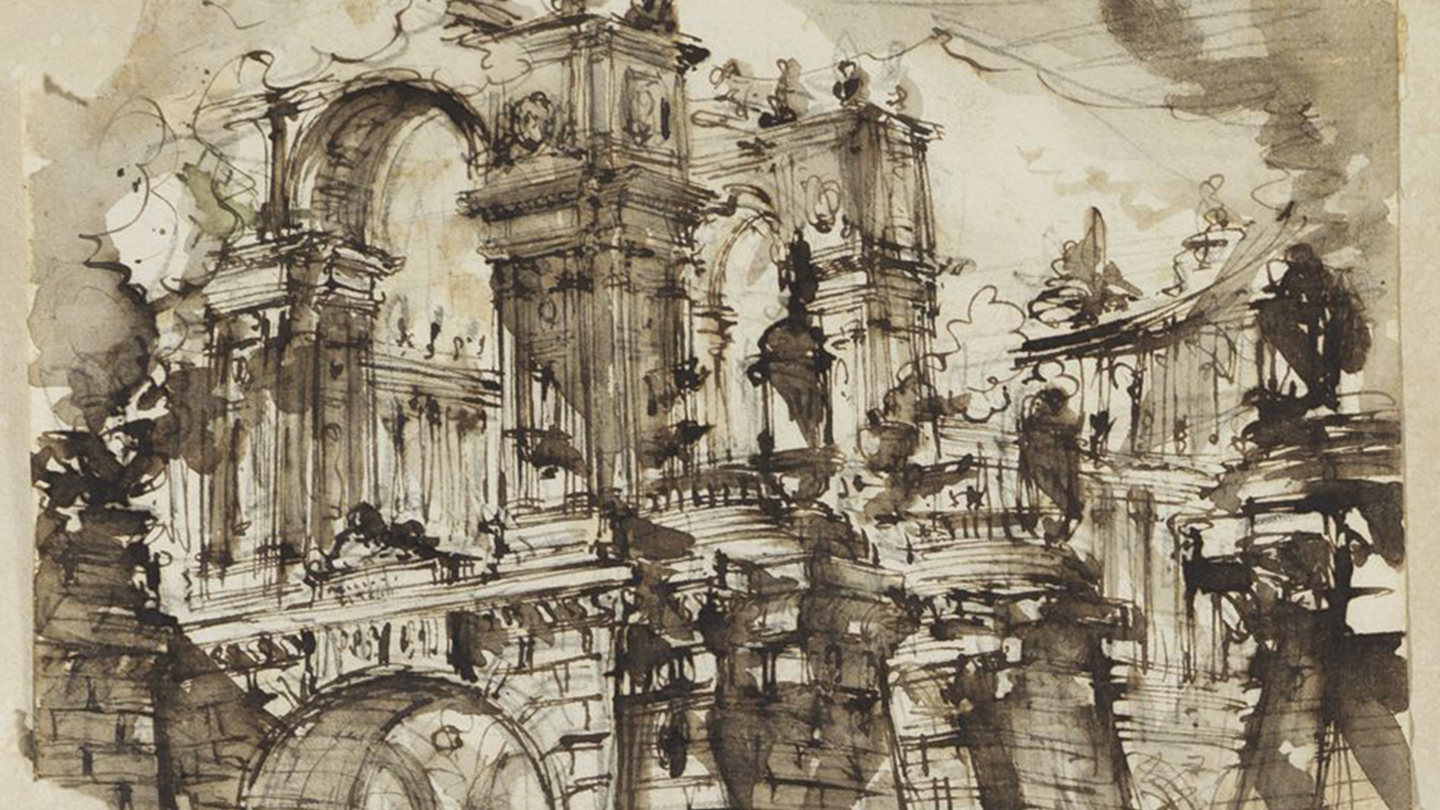
Im Jahr 2014 ist in der Staatlichen Kunsthalle Karlsruhe eine spektakuläre Neubestimmung gelungen: Zwei Alben mit insgesamt 297 Zeichnungen können seither dem römischen Künstler, Architekten, Theoretiker, Antiquar und Antikenhändler Giovanni Battista Piranesi (1720-1778) und seiner Werkstatt zugeordnet werden; bis dahin galten sie als Werke des Karlsruher Architekten Friedrich Weinbrenner (1766-1826). Zahlenmäßig handelt es sich bei dem Fund um die größte zusammenhängende Gruppe von Zeichnungen Piranesis und seines näheren Umfelds. Diese Entdeckung eröffnet die Chance auf eine umfassende Neubewertung des künstlerischen Werkes von Piranesi, das im Fokus des beantragten Projektes steht: Der Fund umfasst die gesamte typologische Breite im zeichnerischen Werk Piranesis - von den frühen capricci bis zu den archäologischen Darstellungen des Spätwerks. Höchst bedeutsam sind die zahlreichen Skizzen, die vor Ort entstandenen Zeichnungen nach der Antike, Abklatsche und anderen Typen von Zeichnungen, die nur höchst selten in Piranesis bisher bekanntem Oeuvre begegnen. Sie liegen hier in großer materialtechnischer Vielfalt vor. Die Zeichnungen weisen außerdem verschiedene Spuren früherer Benutzung und Montierung auf, die vollkommen erhalten sind und die Einblicke in Piranesis Werkstattpraxis erlauben. Teilweise können diese Spuren auf die Benutzung der Blätter als Unterrichtsmaterial in der Karlsruher Bauschule zurückgeführt werden, der Weinbrenner von 1800 bis 1825 vorstand. Er war es vermutlich auch, der die Zeichnungen am Ende seines Romaufenthaltes (1792-1797) in der Werkstatt Piranesis erwarb, sie mit nach Karlsruhe brachte und sie in die heutigen Alben montieren ließ. Die Breite des Bestands reicht geographisch weit über Karlsruhe hinaus: Gegendrucke und Kopien von Karlsruher Blättern befinden sich in den Nachlässen von Architekten des 18. und 19. Jahrhunderts, die heute in internationalen Sammlungen bewahrt werden (London, New York, Besançon, Dessau). Sie bezeugen die große internationale Verbreitung und den Einfluss von Piranesis Zeichnungen, der jetzt neu zu bewerten ist. Das interdisziplinäre Forschungsprojekt, an dem Kunsthistoriker und Restauratoren beteiligt sind, wird die komplexen Zusammenhänge offenlegen, in denen die Karlsruher Zeichnungen entstanden sind. Schlüsselfragen betreffen die Autorschaft Piranesis bzw. der Mitarbeiter seiner Werkstatt, Typus, Funktion und Technik der Zeichnungen, die Werkstattpraxis sowie die Benutzungsspuren und die Konservierung; darüber hinaus wird nach Piranesis Bedeutung für die zeitgenössische römische Graphik- und Buchproduktion gefragt, auch im Hinblick auf ihre weiträumige Verbreitung. Das methodisch innovative Forschungsprojekt wird erstmals die Karlsruher Alben in Piranesis Werk einbetten und deren Bedeutung für die europäische Kunstgeschichte sichtbar machen.
Responsible
Prof. Dr. Christoph FrankCollaborator
Bénédicte Maronnie
Duration
24 monthsBeginning
January 2018Funding sources
SNF, Divisione 1
Expand all
-
The Churches of Rome in the Middle Ages (1050-1300)
The aim of this project is to compile a catalogue, in seven volumes, of the medieval churches, numbering about 120 in all, that remain in Rome or are recorded in the sources, in order to complete the Corpus Cosmatorum II: Die Kirchen der Stadt Rom im Mittelalter (1050-1300) (see SNSF project 101212_124424), undertaken under the direction of Professor Peter Cornelius Claussen at the University of Zurich since 2002.
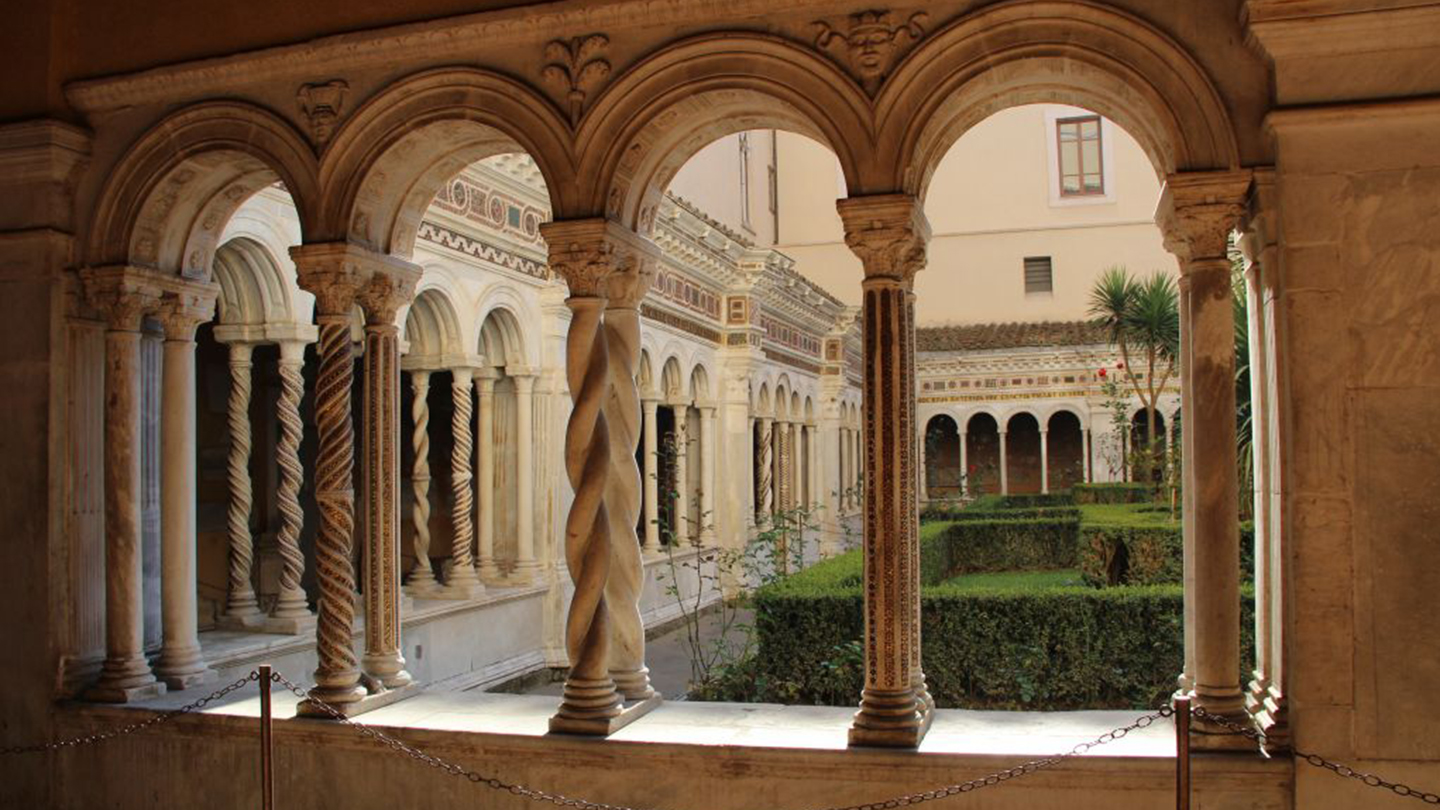
The research examines the architecture and liturgical arrangement of medieval churches in Rome (11th-13th century), devoting particular attention to the art of marble decoration and its relations with antiquity. While the majority of Rome’s medieval churches were replaced by Baroque rebuilding or lost their original furnishings, the study of surviving fragments, as well as the textual and figurative sources, enables us to reconstruct a rich and varied image of the distinctive art of Rome, known as “Cosmatesque”. Each building in the dynamics between the factions occupied a specific position of self-representation of the curia, the aristocracy, the commune or the orders, which depended on strong signs and clear distinctions. Reflecting also the critical fortune and the history of restoration, these "biographies" of the churches of Rome constitute an element of our present history of ideas.
At this stage of the project, the completion and publication of the sixth volume, begun in 2018 and dedicated to the two apostolic basilicas of St. Paul's Outside the Walls and St. Peter's in the Vatican (project 10FI13_170405) as well as the start of research for the seventh volume are planned. This volume, destined to be the final volume of the Corpus, will include about forty churches, starting with P, with S. Pancrazio, and ending with the end of the alphabet. The monuments covered will include important medieval buildings, such as the basilica of S. Prassede, the complex of the SS. Quattro Coronati, the churches of S. Saba, S. Sebastiano fuori le mura, S. Stefano rotondo, SS. Vincenzo e Anastasio and, of course, the papal chapel located in the Lateran Palace, better known as Sancta Sanctorum, that is one of the late 13th century spaces that has best preserved all the splendour and magnificence of the marble, mosaic and pictorial decorations. Moreover, we expect that our study of the lesser-known churches of this volume will lead to unexpected discoveries and bring to light previously unknown or unrecognized works, based on a solid study of written sources and intensive on-site inspections.
Responsible
Prof. Dr. Daniela Mondini
Co-responsible
Prof. Dr. Carola Jäggi, Universität Zürich
Collaborators
Dr. Almuth Klein (USI)
Giorgia Pollio-Rossi (USI)
Angela Yorck von Wartenburg (UZH)
Dr. Biancamaria Hermanin de Reichenfeld (UZH)
External collaborators
Prof. Dr. emer Sible de Blaauw (Radboud University Nijmegen)
Prof. Nicola Camerlenghi (Dartmouth College)
Prof. Dr. emer. Peter Cornelius Claussen (UZH)
Dr. Michael Schmitz (Bibliotheca Hertziana)
Darko Senekovic (Zurich)Duration
37 monthsBeginning
April 2025Funding sources
SNF, Divisione 1Links
USI Search
Research Database SNF
University of Zurich
Expand all
-
Visibility Reclaimed. Experiencing Rome’s First Public Museums (1733-1870). An Analysis of Public Audiences in a Transnational Perspective
The dialogue between museums and the public begins in Rome with the foundation of the Capitoline Museum in 1733 and continues with the renewal and expansion of museums in the Napoleonic era and during the nineteenth century. Rome is here proposed as a laboratory for the constitutive dialogue (sometimes conflictual) between cultural institutions, museums and the visiting public during the early modern age.
The research intends to conceptually study the evolution of the first public museums in Rome in relation to the different geographical origins and categories (social, cultural, gender) of the international and cosmopolitan public who directly accessed their collections. Following the famous formulation that Quatremère de Quincy coined in 1796, in which the entire city is presented as «The Museum of Rome», an immovable patrimony to be shared and protected in its entirety, here we intend to study its collections of antiquities, palatial galleries, patrician villas, ancient and modern monuments as a dynamic network of urban places, itineraries and circuits of visits on the city’s map.
The research questions (how was the public museum defined and perceived at its origins, in terms of its ever greater significance as architectural space and shared experience? Which and how many publics accessed the first public museums? Which and how many publics were excluded?) place the “embodied encounter“ at the centre of historical and critical reflection on the museum, which invites us to go beyond the visual dimension that the exhibition space presupposes and to probe its characteristics and outcomes in light of the material experience of museum space and collectorship and the systems of disciplining the public itself implemented by the institutions during the course of the eighteenth and nineteenth century.
According to an interdisciplinary method that includes the history of cultural institutions, social sciences, the history of literature, anthropology and material culture, the history of economics and of cultural consumption, the project places a corpus of primary sources, mostly unpublished, at the centre of the research, including the requests formulated and the permissions granted to access museums, requests for visiting, copying and studying museums and ancient monuments, and visitors’ books. The comparison with critical methodologies that have stressed the importance of mobility over ‘national’ paradigms, and provided a dynamic artistic geography of Rome in the 18th and 19th centuries is the foundation of the reflections on the project and lends itself to a transnational and comparative approach to other geographies.
This vocation is reflected in the makeup of the research team, which will also draw on the expertise of an international Advisory Board that includes some of the top specialists in Europe and the United States in the field of museum history and theory.
Responsible
Prof. Dr. Carla Mazzarelli (USI)Scientific collaborators
Luca Bonazzi (USI)
Gaetano Cascino (USI)
Mattia Giovanelli (USI)
Francesca La Mantia (USI)
Luca Piccoli (USI)
Angelica Sabatini (USI)Project partners
Giovanna Capitelli (Università Roma Tre)
Stefano Cracolici (Durham University)
Christoph Frank (USI)
David Garcia Cueto (Museo Nacional de Prado)
Daniela Mondini (USI)
Chiara Piva (Università di Roma - La Sapienza)Duration
48 monthsBeginning
February 2023Funding sources
SNF, Divisione 1Links
Research Database SNF
Expand all
-
ASR: Aerial Spatial Revolution
Airborne technologies, such as aviation, drones and satellites, have become powerful tools for the representation, planning, control and governance of space. This spatial revolution that started with aeronautics in the early 20th century, however, has not yet been thoroughly studied in all its implications. The project provides the first systematic and interdisciplinary inquiry into the history and impact of the aerial spatial revolution. Ranging from the eve of 20th century to the present day, the collaborative project focuses on the material and imaginary effects on the city, architecture and territory. The study is structured along three interconnected axes: ‘aero-vision’, ‘aero-planning’ and ‘aero-politics’.
The first axis analyzes the epistemological and phenomenological significance of the vision from above, be it human or artificial. The second studies the far-reaching effects on architecture, planning and landscape. The third axis focuses on the spatial-political effects of air control, all the way to the impact of satellite and drone imagery.
This project brings together experts in urban planning and architecture, aesthetics, visual media theory and political philosophy and sets up a collaborative research between the SUPSI, the University of Fribourg and the OST Eastern Switzerland University of Applied Sciences. With a wide depth of field and a broad time span covered, the genealogical method will allow to identify the epistemological patterns, visual codes and symbolic effects that have oriented the development of the aerial space revolution up until now.
Project web page
Responsible
Prof. Matteo Vegetti (USI)
Prof. Katrin Albrecht (OST)
Prof. Emmanuel Alloa (UNIFR)Scientific collaborators
Dr. Alessandro De Cesaris
Dr. Angela Gigliotti (OST)
Lisa Henicz (USI/OST)
Dr. Lilian Kroth (UNIFR)
Dr. CLaudia Nigrelli (SUPSI)
Dr. Tommaso Morawaski
Lucrezia Pozzi (USI/SUPSI)
Emanuel Tandler (UNIFR)Project partners
Prof. Christoph Frank (USI)
Prof. Caren Kaplan (Univ. of California, Davis)
Prof. Antonio Somaini (Paris III-Sorbonne Nouvelle)
Prof. Jennifer K. Lavasseur (Smithsonian National Air and Space Museum, Washington, D.C.)
Prof. Lisa Parks (MIT, Cambridge MA)Duration
36 monthsBeginning
April 2024Funding sources
FNS
Expand all
-
ReSED API - Re-Use Standards for Editions Data with Application Programming Interfaces
ReSED API is a project funded by Swissuniversities within its Open Research Data (ORD) Track A program. It aims to enhance the re-use of digital scholarly editions—critical digital representations of historical, literary, and other significant texts—by promoting machine-readable access through standardized Application Programming Interfaces (APIs). While such editions have long been re-used manually for research, teaching, and reference, modern digital formats now enable automated processing and large-scale analysis. However, re-use remains limited due to technical barriers, inconsistent practices, and a lack of widely adopted standards.
Re-using edition data offers considerable benefits: enabling large-scale text analysis, supporting historical and literary research, potentially training AI models, and integrating scholarly resources into broader digital archives. To fully realize this potential, the project emphasizes alignment with FAIR principles (Findable, Accessible, Interoperable, and Reusable), ensuring that digital editions can be reliably discovered and re-used across disciplines.
The project pursues two primary goals:- Explore ORD practices related to data-re-use and APIs within the field of editions;
- Specify ORD standards based on the analysis of the needs and desiderata of the community.
To achieve these goals, the ReSED API project will conduct structured interviews with key stakeholders, organize interdisciplinary workshops and training sessions, and produce deliverables such as reports on data-sharing practices, training materials, guidelines for data re-use, and drafted API specifications tailored to scholarly needs.
By fostering a culture of data re-use and promoting technical standardization, the project will make edition data more accessible and reusable, advance digital humanities research, and support broader applications such as federated search, large-scale computational analysis, and machine learning training. Ultimately, this initiative will ensure that digital scholarly editions remain discoverable, interoperable, and reusable for future generations of researchers.
Key dates:ReSED API Workshop, 29-30 January 2026, University of Zurich
The workshop will provide training on the subject of APIs, present cases of successful implementations of APIs and data re-use in scholarly editions and formulate scenarios as a basis for draft community API standard.
Responsible
Elena Chestnova (USI)Scientific collaborators
Peter Dängeli (Data Science Lab, University of Berne)
Dr. Federico Grasso Toro (University Library, Berne)
Prof. Dr. Elena Spadini (Walter Benjamin Kolleg, University of Berne)
Dr. Yann Stricker (Zentrum Digitale Editionen & Editionsanalytik, University of Zurich)
Duration
12 monthsBeginning
June 2025Funding sources
SwissuniversitiesLinks
USI Search
Expand all
-
Voyaging Vapors. Plant Histories of Plantation Architectures
"Voyaging Vapors: Plant Histories of Plantation Architectures" is funded by the Swiss National Science Foundation Ambizione scheme (690,740 CHF, project number 216182). The project runs from 2024 until 2028 and is hosted by the Academy of Architecture, Università della Svizzera italiana, where it is integrated with the Institute of the History and Theory of Art and Architecture (ISA); the Institute of Urban and Landscape Studies (ISUP); and the Professorship for Theory of Urbanization and Urban Environments (Prof. Sascha Roesler).
Morning haze over tobacco crops; smoke curling from a tobacco pipe; vaporous opium fumes; a tobacco barn in flames. The plantation system in nineteenth-century Southeast Asia was a mix of substances in transport and transformation, afforded by violent processes crucial to a system of land expropriation. This project takes a wide-angle view of the architecture of the plantation and the plantation as conceptual formation.
Architectural spaces mediated and scripted this system in distinctive ways. The opening of the Suez Canal in 1869 and the rise of steam powered ocean-going liners marked a new era of resource extraction and trade in the Malay Archipelago, where, by the late-nineteenth century, tobacco drying barns and planters’ houses; packing facilities in entrepôt port cities; shops, tea-houses, and advertising in colonial metropoles were fixtures in the architectural pantheon of a globalized plantation culture.
Plants were simultaneously crops, cargo, and building materials, giving them an unusual centrality to this process, and presenting an underexplored architectural archive. This research proposes to investigate the architectures of plantation culture, beginning with Swiss tobacco planting in Sumatra in the 1870s, following the routes of plant species as a methodological framework across geographies. The multi-sited project will be carried out in tropical Southeast Asia, Switzerland, and wider Europe, following the route that tobacco and other cash crops took, from the Malacca Straits, through the Suez Canal, and on into Europe. The historical scope of the project will accommodate nineteenth- and twentieth-century transformations in the architecture of the plantation and its role in environmental change as forerunners to twentieth-century monocrop agribusiness. More broadly, the project takes its cue from studies that engage multiple temporal and geographical frameworks as a creative way to manage histories of the Anthropocene and climate catastrophe. Architecture, as a material, scientific, and cultural practice, offers a distinctive lens through which to understand the history of plantation systems. Architecture’s material residue-timber, stone, plant materials, masonry, human labor-are intrinsically related to their geographical setting and form the empirical evidence for this project. Re-examining the colonial plantation through the tobacco plant as traveling subject reveals an entangled set of architectural case studies.
Responsible
Will Davis (USI)Scientific collaborators
Hélène Padma De Mello (USI)
Pina Kalina Haas (USI)Core project collaborators
Prof. Dr. Rixt Woudstra (University of Amsterdam)
Siddharta Perez (Museum Curatorial Lead, National University of Singapore Museum)
Giah De los Reyes (Independent Artist, Milan)Project Network
Sri Shindi Indira, Beranda Warisan Sumatra (Sumatra Heritage Trust); Institut Sains dan Teknologi Nasional (ISTN)
Professor Isnen Fitri, Department of Architecture, University of North Sumatra
Judith Schubiger, Villa Patumbah, Schweizer Heimatschutz
Professor Budi Agustono, Department of History, University of North Sumatra
Muhammad Rasyidin, Department of History, University of North SumatraDuration
48 mesiBeginning
February 2024Funding sources
SNF, AmbizioneLinks
www.voyagingvapors.com
Expand all
-
City of Signs: Understanding Logos

Logos, ubiquitous yet often overlooked, are the silent markers of our world. They adorn products, uniforms and institutions — such as political parties, corporations, cities, universities, sports teams or events. In our modern landscapes, they saturate our surroundings, blending with architecture, guiding travelers along motorways, dominating our skies on airline liveries and even finding a place in the most intimate corners of our homes — from book spines and refrigerators to toys, clothing and digital screens.
Logos are not just symbols. We design them, but in turn, they shape us: they steer desires and consumption, structure our communication, mediate social conflicts and enable political propaganda.
By viewing the logo as an “impersonal influencer” within a broader “logoscape” — the visual–social environment we inhabit — this research seeks to answer a dual question: how do logos function across economic, political, religious and cultural domains? How could a more comprehensive public understanding reshape the way institutions, designers and citizens utilize and perceive them?
To address this, the project conceives logos as total social facts, artifacts that simultaneously mediate economic, political, and symbolic relations. The social aesthetic approach combines the conceptual, synthetic, and reflective orientation of philosophy with the empirical insights of the social sciences, avoiding disciplinary fragmentation and recovering the logo’s anthropological depth—its capacity to visually encode belonging, recognition, and distinction.
Historically, the project reconstructs a long-term genealogy that challenges the assumption that the logo is a recent product of Western capitalism. Its lineage intersects with numismatics and heraldry, the Renaissance tradition of emblems, the history of artists’ signatures and royal manufactories, and culminates in modern brand culture. This historical depth clarifies the logo’s role in shaping human forms of life.
Geographically, the project foregrounds the global dimension of the logoscape through archival inquiry and comparative fieldwork in diverse urban environments—New York, Tokyo, Kyoto, Mumbai, New Delhi, and Siena—examining how logos mediate belonging, conflict, commerce, and cultural life at a global scale.
Complementing the academic inquiry, a practice-based component will engage graphic designers and produce an original photographic documentation. The five-year program will culminate in the exhibition Logoscapes: Between Past, Present and Future and in a collective, illustrated volume for scholars, practitioners, and citizens.
Responsible
Prof. Dr. Barbara Carnevali (USI, École des Hautes Études en Sciences Sociales)Scientific collaborators
Dr. Adele Rugini (USI, École des Hautes Études en Sciences Sociales)
Dr. Doriane Molay (USI, Écoles des Hautes Études en Sciences Sociales)
Duration
60 monthsBeginning
October 2025Funding sources
NOMIS FoundationLinks
NOMIS Foundation
Expand all
-
André Corboz’s hermeneutics of urban and territorial form: research practices, concepts and methodologies
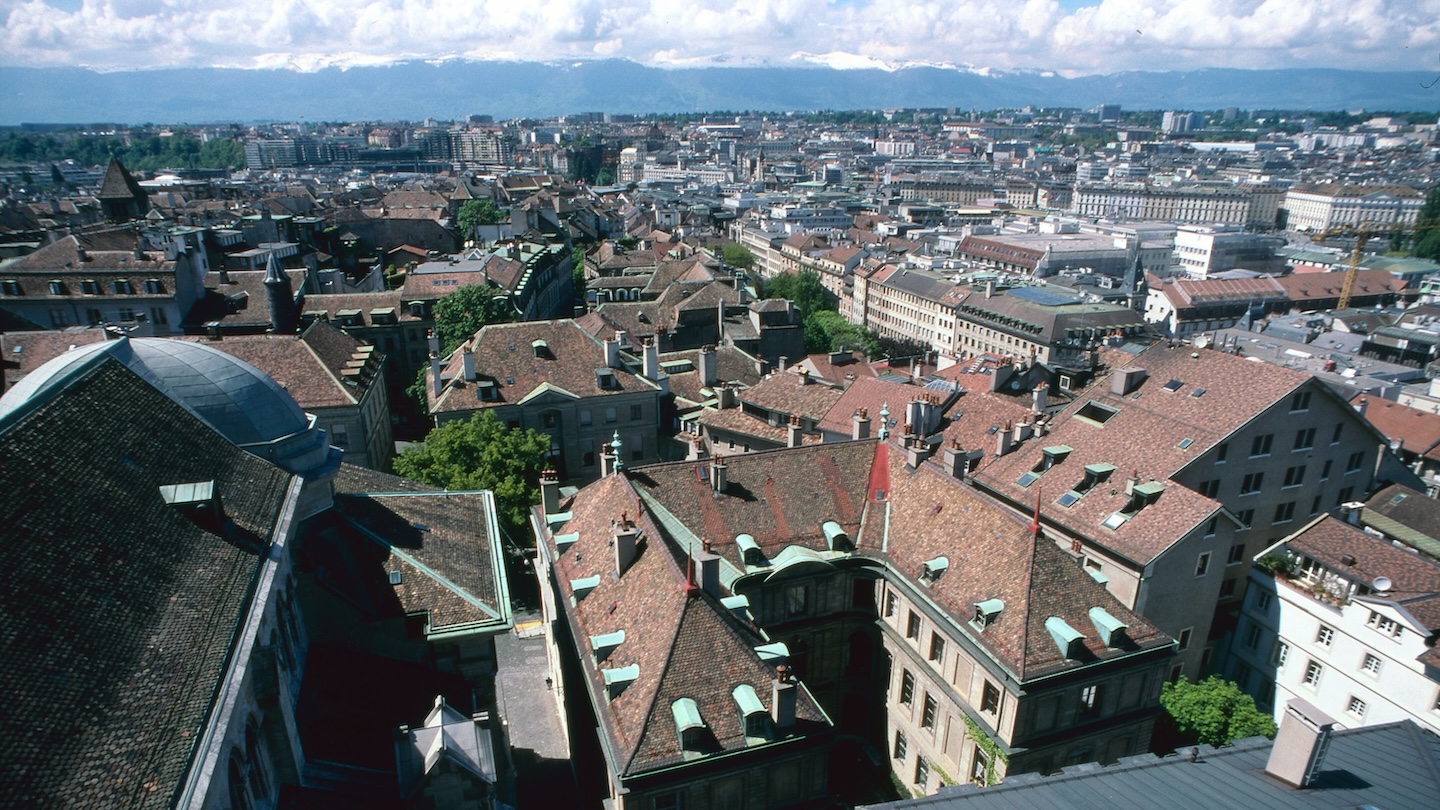
The project investigates the research methodologies and practices of André Corboz (1928-2012), one of the most distinguished personalities in the field of urban and territorial studies, thereby allowing for a better understanding of his impact on the related disciplines in the light of the particularities of his work. The project aims to nurture the debate on the scientificity of disciplinary domains engaging with the built environment, their essential interdisciplinary nature and their ability to catalyse interdisciplinary approaches. From a more general perspective, the project will use the case of Corboz to provide a better understanding of the potential of cross-methodological research practices for investigating complex urban and territorial phenomena. At a societal level, the project ultimately aims to raise awareness for the interaction between humans and the environment.
Corboz, initially trained in law, became an academic only in his late thirties. After having taught architectural history at University of Montréal from 1967 onwards, he held the chair for the history of urbanism at ETH Zurich from 1980 to 1993. His research and theorising demonstrate a high degree of independence from the disciplinary codes of their time. Privileging transversal methods of speculation and open forms of interpretation, he brought together various strands of knowledge from the fields of art, architecture and urban history in his scholarly work. Building on the insights gained from the exhibition Territory as Palimpsest: The Legacy of André Corboz (USI Mendrisio 2022/23 and EPFL 2023, curated by André Bideau and Sonja Hildebrand with Anna Bernardi, Elena Cogato Lanza and Frida Grahn), which reconstructed the main outlines of Corboz's intellectual career from its beginnings based on a systematic evaluation of Corboz’s estate, the present research project examines for the first time Corboz's entire intellectual trajectory, from his early works in the second half of the 1950s to his late writings and research projects at the beginning of the 2000s. This will be done by means of a systematic analysis of Corboz’s methodological position, balancing it with Corboz’s research practices and their particularities. The scope of the project covers Corboz’s contributions to urban and territorial studies, his most recognised field of scholarship which, however, has only been dealt with fragmentarily to date, just as continuities and developments in Corboz's thinking have rarely been addressed.
The project comprises three interconnected subprojects. Subproject 1 Urban imaginaries: Paths, origins, and the development of an underlying theme will trace the genealogy and evolution of Corboz’s engagement with the imaginary as a theme that recurs throughout his works across various phases of his career and develop a theoretical framework for understanding his hermeneutic approach to urban and territorial forms (Bernardi, Reis). Subproject 2 Geneva – a place of “sedimentary urbanism” will reconstruct Corboz’s research and writing on his hometown which spread through more than 40 years and different formats and situate it in the national and international debate on urban history and history of urbanism (Cogato Lanza, Riondel). Subproject 3 Corboz’s reading of territorial form will investigate Corboz’s research on territorial configurations and contemporary urbanisation phenomena, examining how the large scale impacted his research practices, methodologies and theoretical framework and placing him in the national and international discourse on urbanization (Hildebrand, Mauta, Bideau). Each subproject will produce a critical inventory of its main corpus, journal articles and a PhD dissertation. The Corboz website created in conjunction with the Mendrisio exhibition will ensure extended visibility to the totality of research and its outputs.
Responsible
Prof. Dr. Sonja Hildebrand (USI)Co-Responsible
Prof. Dr. Elena Cogato Lanza (EPFL)Collaborators
Dr. Anna Bernardi (USI)
Gianni Mauta, M.Sc. arch. and planning (USI)
Bianca Molina Reis, MSTAA (USI)
Julie Riondel, M.Sc. arch. (EPFL)Project Partner
Dr. André Bideau (ETH Zurich)
Duration
48 monthsBeginning
July 2026Funding sources
SNSFLinks
Territory as Palimpsest: The Legacy of André Corboz, exhibition Teatro dell'architettura, USI, Mendrisio, 2022/23;
Research Database FNS;
André Corboz website.
